


What We Learned from a Year-Long Study at the Gannochy Trust
The Gannochy Trust is committed to providing warm, comfortable and affordable homes that support people throughout all stages of life. To help us understand how well our newest homes are performing in real life, we worked with The Glasgow School of Art’s Mackintosh Environmental Architecture Research Unit (MEARU) on a detailed, year-long study.
This research focused on eight homes within our award-winning lifetime homes development, which was completed in 2020. The aim was simple: to see how these homes perform day-to-day for the people who live in them – in terms of comfort, air quality, warmth and affordability – and to learn lessons that can shape future housing projects in Scotland.
Why This Study Was Carried Out
When the new homes were being designed, great care was taken to make sure they would be affordable to run, well-ventilated and healthy to live in. These principles followed the original vision of A K Bell, who believed that good housing should promote both wellbeing and dignity.
With support from Construction Scotland Innovation Centre (now BE-ST), the Trust and MEARU were able to monitor how well the homes were working once people moved in. One of the bold aims of the project was to create homes that were airtight and energy-efficient, but without relying on complex mechanical ventilation systems.
Eight homes were selected for monitoring so that design expectations could be compared with real-world performance. The wider goal was to share these findings with the housing sector across Scotland and help improve future affordable housing.
How the Study Worked
Between May 2023 and May 2024, sensors were placed in key rooms of eight homes to measure:
- Temperature
- Humidity
- Carbon dioxide (CO₂), which helps indicate air quality
Extra monitoring took place in kitchens, where more air pollutants can be present. Data was collected continuously and analysed over the full year.
Other checks were also carried out, including:
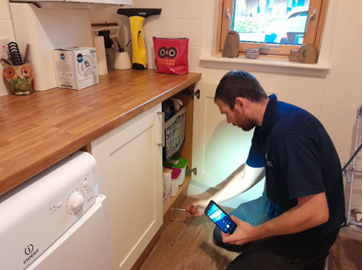
- Air tightness testing to see how well the homes prevent unwanted draughts and heat loss
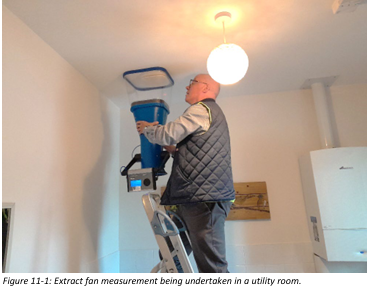
- Ventilation fan testing to check how well air is being extracted from bathrooms and kitchens
- Air quality sampling in two homes to look for everyday chemicals in the air
- Thermal performance tests to see how well walls and insulation were working
- In-person tenant surveys, where residents shared their lived experience of comfort, heating, ventilation and energy costs


What Residents Told Us
One of the strongest messages from the study is that residents are very happy in their homes.
Tenants spoke warmly about:
- The space and layout of their homes
- The brightness and modern design
- The feeling of warmth, safety and security
- The much-loved sitooteries, which add extra usable space
- The support provided by the Gannochy Trust, including tenant packs and clear communication
Many tenants said their new homes felt much larger than their previous properties, especially the bedrooms and kitchens. Others commented on the lack of draughts and how well-insulated the houses feel – one resident even noted that snow stays on the roof longer, showing how well heat is retained.
When asked what they would change, most tenants said very little.
What the Monitoring Showed
Overall, the homes performed well across the year.
- Temperatures were generally comfortable – cooler than average in summer and close to target levels in winter
- Importantly, no homes overheated during warm weather
- Air quality was generally good, with carbon dioxide levels staying within healthy limits most of the time
- Humidity levels were sometimes higher than ideal, which can increase the risk of condensation and mould if left unchecked
The study also highlighted that residents could benefit from more guidance on night-time ventilation, especially around using window ventilators to help manage moisture and air quality.
Key Technical Findings
- The homes were found to be largely airtight, which is good for keeping heat in and energy bills down
- Some insulation did not perform quite as well as expected, suggesting that quality control during installation could be improved
- The natural ventilation system (Passivent) worked well overall, although tenants would like more control over how long it runs
- Some extractor fans were weaker than expected, likely due to long ducting runs
- Energy costs varied between similar households, with some spending more than others
What This Means Going Forward
This study confirms that the lifetime homes at the Gannochy Trust are delivering on their core aims: providing warm, comfortable and well-designed homes that people genuinely enjoy living in.
It has also highlighted a few areas for improvement – particularly around ventilation use, insulation quality control and helping tenants better understand how to manage air flow and energy use in their homes.
Most importantly, the findings will help shape future housing developments, not just for the Gannochy Trust, but across the wider affordable housing sector in Scotland.